
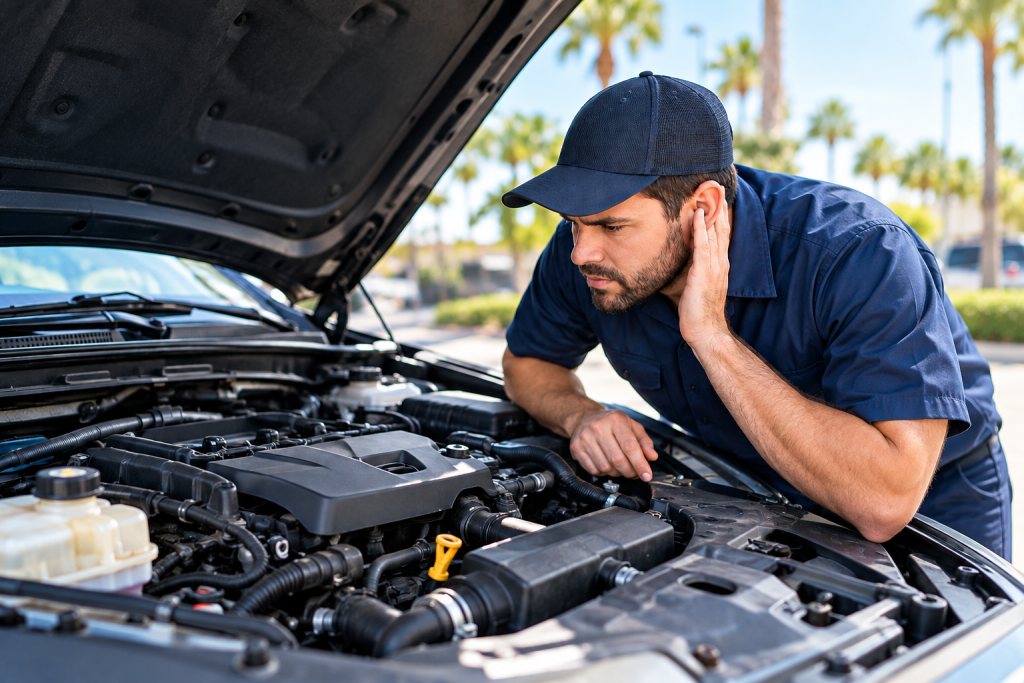
Summer in Las Vegas is a test for every car on the road. When the thermometer climbs past 110 degrees, the pavement gets even hotter, and a parked car can turn into an oven within minutes. Heat that intense is hard on nearly every system in your vehicle, and the damage tends to build quietly until something fails at the worst possible moment, usually on a long stretch of highway or in a hot parking lot.
The good news is that most heat related breakdowns are preventable. A handful of well timed checks can protect your battery, your air conditioning, your cooling system, and your tires through the hottest months. Here is what to focus on before and during a Las Vegas summer.
Protect Your Battery From the Heat
Many drivers assume cold weather is what kills batteries, but heat does the real damage. High temperatures speed up the chemical reactions inside a battery and cause fluid to evaporate, which leads to internal corrosion and a shorter lifespan. The failure often shows up later, when the battery has been weakened all summer and finally gives out on a cooler morning.
In the desert, a battery that would last five years elsewhere may last closer to three. Have it tested before summer starts, since a simple load test shows how much life is left. Keep the terminals clean and tight, because corrosion adds resistance and makes a weak battery struggle even more. If your battery is more than three years old, it is smart to monitor it closely. We cover this topic in more detail in our article on how desert heat shortens your car battery’s lifespan in Las Vegas.
Keep Your Air Conditioning Ready
In Las Vegas, AC is a safety feature as much as a comfort. A cabin that will not cool down makes long drives tiring and can be dangerous for children, older passengers, and pets. Do not wait for the first scorching week to find out the system is weak.
Start your own check by running the AC on its coldest setting and noting how quickly the air cools. Weak airflow often points to a clogged cabin air filter, which is cheap to replace, especially in a dusty climate. Air that is not cold enough can mean low refrigerant from a small leak, a failing compressor, or a condenser clogged with dirt. Unusual noises when the AC kicks on deserve attention too, since a worn compressor can fail without much warning. Catching a small leak early costs far less than replacing the compressor later.
Take Care of the Cooling System
Your engine produces plenty of heat on its own, and desert temperatures leave very little room for error. The cooling system keeps everything in a safe range, and a weak link can lead to overheating, which is one of the costliest ways to damage an engine.
Check your coolant level when the engine is cold, and look at the color. Coolant that is rusty, sludgy, or very low needs attention. Old coolant loses its protective additives, so follow the replacement schedule in your owner’s manual. Inspect the radiator hoses for cracks, bulges, or soft spots, and look for dried residue or puddles under the car that suggest a leak. A thermostat that sticks or a water pump that is wearing out can cause trouble quickly in extreme heat, so do not ignore a temperature gauge that creeps higher than usual.
If your gauge starts to climb while you are driving, turn off the AC, turn on the heater to pull heat away from the engine, and pull over safely when you can. Never open a hot radiator cap.
Watch Your Tires
Hot asphalt raises tire temperatures well above the air temperature, and heat increases the pressure inside the tire. Underinflated tires flex more and build up even more heat, which raises the risk of a blowout at highway speed. Overinflated tires wear unevenly and have less grip.
Check tire pressure when the tires are cold, such as first thing in the morning, and use the number on the sticker inside the driver’s door rather than the number printed on the tire. Look at the sidewalls for cracks, which the sun can cause over time, and check the tread depth. Tires that were fine in winter may be past their limit after a hard summer, and old tires dry out and crack even if the tread looks fine.
Check Fluids and Belts
Heat thins out engine oil and makes it break down faster. Check your oil level and condition regularly, and consider a change a bit earlier than usual if you do a lot of stop and go driving. Brake fluid, power steering fluid, and transmission fluid also work harder in high temperatures, so low or dark fluid should be looked at.
Rubber parts such as belts and hoses dry out and crack faster in desert conditions. A serpentine belt that squeals or shows cracks should be replaced before it snaps, because a broken belt can disable the alternator, power steering, and water pump all at once.
Protect the Inside and Outside of Your Car
Sun exposure fades paint, cracks dashboards, and damages leather and plastic. A windshield sunshade can drop the interior temperature noticeably, and parking in shade or a garage whenever possible helps everything last longer. Never leave children or pets in a parked car, even for a short time, since the temperature inside can reach dangerous levels in minutes.
Wiper blades also suffer in the heat. The rubber hardens and leaves streaks when the monsoon rains finally arrive, so replace them if they chatter or smear.
Build a Simple Summer Emergency Kit
Even a well maintained car can run into trouble, and a breakdown in 115 degree weather is a real safety concern. Keep these items in your car through the summer:
- Plenty of drinking water for everyone in the car
- A fully charged phone and a car charger or power bank
- Jumper cables or a portable jump starter
- A sunshade, hat, and sunglasses
- A flashlight and a basic tool kit
Why Summer Service Works Best With a Mobile Mechanic
Nobody wants to wait around a hot shop lobby or drive a struggling car across the valley in July. A mobile mechanic brings the shop to you, whether you are at home in Henderson, at the office downtown, or in a parking lot on the Strip. Battery tests, fluid checks, belt replacements, and many AC and cooling system repairs can be handled right where your car is parked, saving you time and keeping you out of the heat.
Get Ahead of the Heat
The best summer maintenance plan is a simple one: test the battery, confirm the AC works, check the coolant and hoses, inspect the tires, and top off fluids. Doing these things before the worst heat arrives is far easier than dealing with a breakdown in the middle of it.
To learn more about what we offer, visit our homepage. When you are ready to schedule a summer checkup, reach out through our contact us page and we will come to you anywhere in the Las Vegas area.
A little preparation now can keep your car reliable all summer long, no matter how high the temperature climbs.